Entry, mid or touring recumbent? What the price tag leaves out
choosing, fitting and riding recumbent cycles, including tadpole and delta trikes and two-wheel recumbents
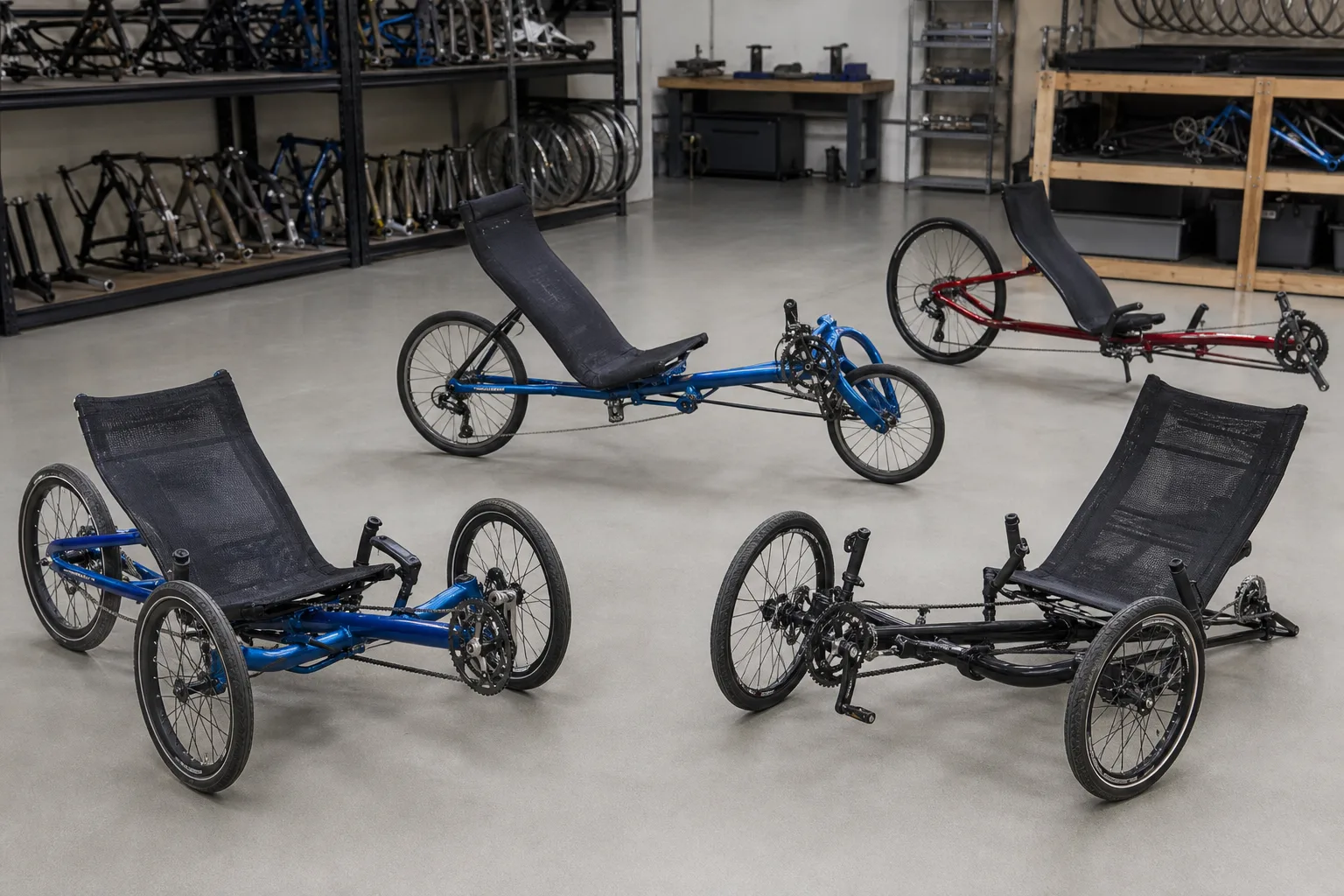
A recumbent quoted at one number and ridden at another is not a trick, it is just how the category works, because the machine leaves the factory as a frame, a seat, a drivetrain and wheels, and almost everything that makes it usable on a public road gets added later. The careful reader treats the sticker as the start of a short list rather than the end of one. What follows compares the three build tiers most shops stock, entry, mid and touring, in terms of what each one arrives with, what it reliably does not, and where the labor hides.
The three tiers, and what each one actually includes
An entry build, usually a steel tadpole trike with a mesh seat and a rear derailleur, sits in the same money as a well-specified commuter bicycle, sometimes a little above it. A mid build moves to lighter tubing, better brakes, a folding or separable frame, and a seat with real adjustment, and it typically lands at roughly double the entry number. A touring build, with a suspended rear end, a wide gear range, dynamo lighting and mounts everywhere, runs several times the entry figure. What none of the three tiers include, as a rule, is the accessory kit that a recumbent needs and an upright bicycle mostly does not.
Mirrors and a flag are not optional equipment
Sitting low changes what you can see and what sees you, so a mirror stops being a comfort item and becomes the way you check a lane before moving into it, since turning to look over a shoulder from a reclined seat shows you the seat back. Most riders end up with two mirrors, one per side, because one mirror leaves a gap exactly where a car appears. A flag on a fiberglass pole does the other half of the job, lifting a visible marker to roughly the height of a driver's sightline. Both are cheap. Both are almost never in the box, and both need mounting hardware that fits the specific boom or seat frame.
The chain, and the shop hours it quietly consumes
A recumbent runs a chain around two and a half to three times the length of a bicycle chain, routed through idler wheels or tubes to keep it clear of the front wheels and the rider's legs. Buying that chain means buying two or three standard chains and joining them, and getting the routing right means setting idler position, chain tube length and boom extension together, because moving the boom for leg length changes the chain length needed. That is real bench time, and shops bill it. A careful reader asks, before the deposit, whether the quote covers assembly, boom fitting to the rider's inseam, chain sizing and a road test, or whether those are separate line items.
Racks, bags and the parts that only fit one machine
Panniers are where the tiers diverge most. A touring build usually has rack mounts designed in, so a rear rack bolts on and standard bags hang correctly. An entry or mid trike often needs a rack made for that exact frame, and a generic bicycle rack will foul the rear suspension, the seat stays or the chain line. Underseat bags and seat-back bags carry a surprising amount and cost less than a rack and pannier set, which is worth knowing before ordering hardware. The Consumer Product Safety Commission oversees safety requirements for bicycles sold in the United States, including reflector placement, and a low machine with loaded rear bags is worth checking against that after everything is mounted.
How to compare two quotes honestly
Write the same list against each machine you are considering: mirrors and their mounts, flag and pole, lights front and rear that work from a low seat, computer sensor placement, chain and idler hardware, rack or bags, a pump and spares for three wheels rather than two if it is a trike, and the shop's setup hours. Then compare totals rather than stickers. A mid build that includes rack mounts and a dealer setup often finishes cheaper than an entry build bought online and outfitted piecemeal, and it finishes sooner too.
The number worth carrying into the showroom is the one that includes the flag, the mirrors, the chain and the bench time, because that is the number you will actually pay before the first real ride.